Bids, Proposals & Messaging
Structured negotiation, targeted proposals, and built-in messaging. Every buyer-vendor conversation in one place — auditable, contextual, and tied to orders.
Book a Demo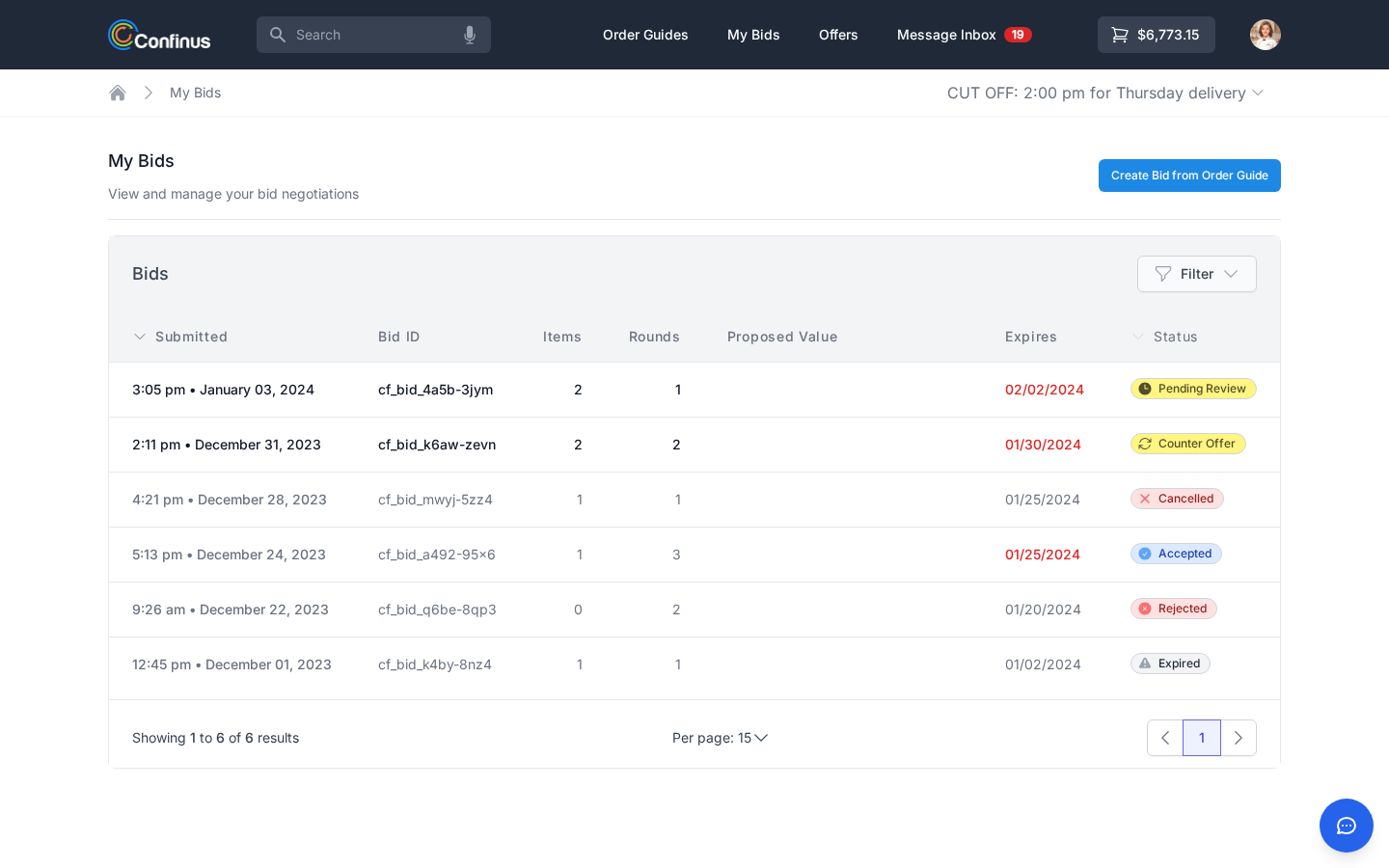
The problem with unstructured negotiation
A hospital group wants to lock in 40 SKUs for next quarter. Spreadsheet via email. Your rep adjusts, sends it back. They counter. You counter. Three weeks later you’ve agreed, but the final version lives in someone’s inbox and nobody knows which attachment is real.
Meanwhile, 200 cases of salmon need to move this week. Your reps start calling top accounts. No record of who was offered what, who accepted, or how many cases remain.
It works until a buyer disputes a verbal price. Until you can’t prove what was offered, when, and to whom.
Bid Negotiation
Structured, multi-round, auditable. Replaces email-based price negotiation with a formal bid workflow.
Buyer submits a bid
They select products, propose quantities and prices, set a preferred delivery date, and submit. The bid goes to the distributor for review.
Multi-round counter-offers
Accept, reject, or counter. Each round captures who proposed what, and when.
Automatic expiration
No response in time? The bid expires automatically. No stale negotiations sitting in limbo.
Accepted bids convert to orders
Accepted bids convert directly to orders. No re-entry. Negotiated prices flow straight through.
Full audit trail
Every round, every counter-offer, every price change — recorded with timestamps and user attribution. “What did we agree to in January?” Pull up the bid and show them.
Order Proposals
Bids are buyer-initiated. Proposals go the other direction — you push offers to buyers. Surplus inventory, seasonal pricing, contract renewals.
Attach products with special pricing and target the exact buyers who should see it.
Targeted or public visibility
Send to specific entities, locations, or groups. Or make it public to all buyers in your catalog.
Limited availability
Cap the number of acceptances. First 10 accounts to accept get the deal. When slots fill, the proposal closes automatically.
Expiration dates
Every proposal has a deadline. It expires when the date passes. No manual cleanup.
Duplicate and reuse
Ran a successful promotion last quarter? Duplicate, adjust dates and pricing, publish. Two minutes.
Built-in messaging
Not every conversation is a negotiation. Substitution questions, delivery changes, special requests — these happen around orders, not in a separate channel. Confinus keeps them in context.
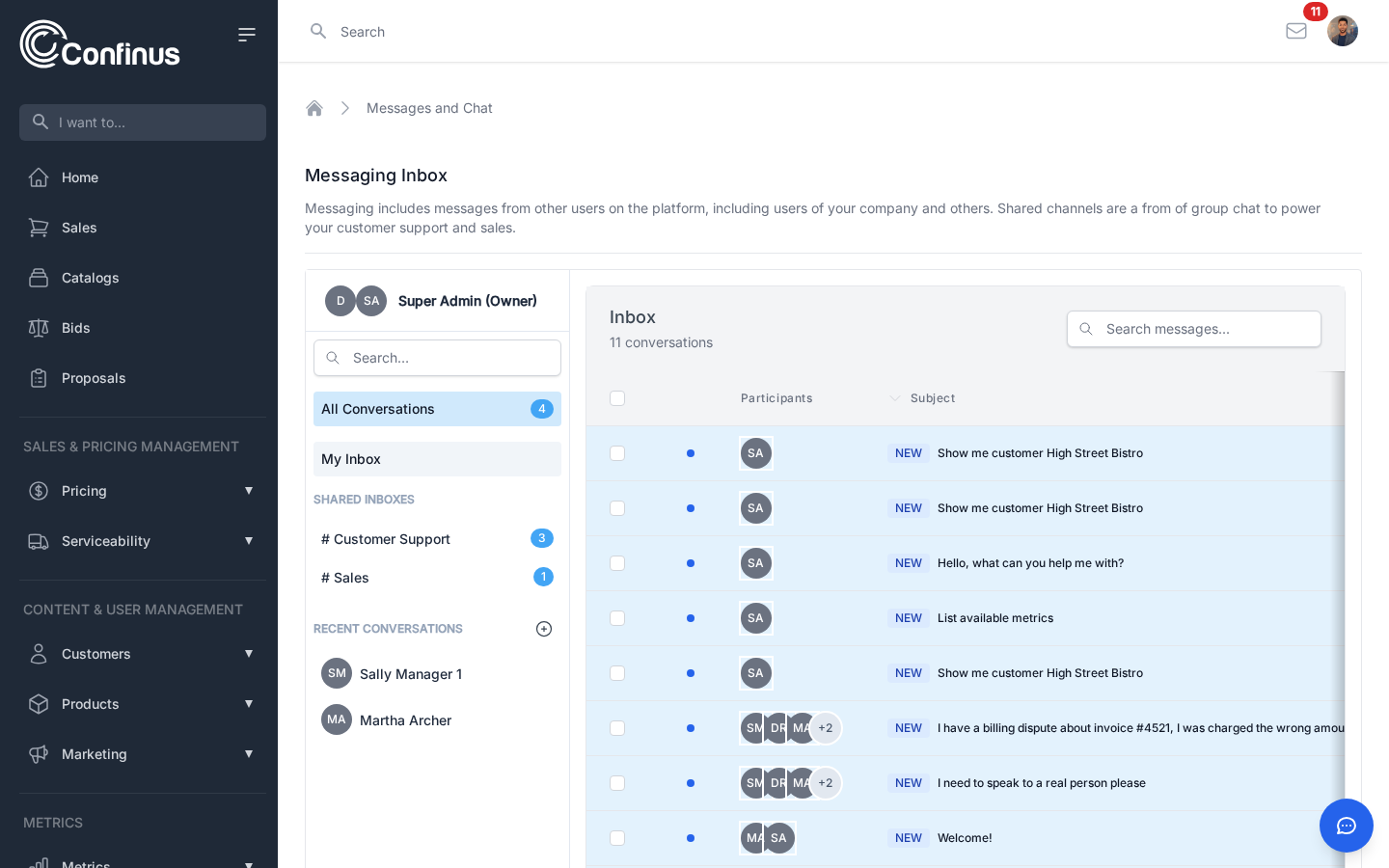
Reps and buyers message each other directly in the platform. Conversations are tied to orders, accounts, and products — not lost in email threads or voicemail. Your sales team stays close to their accounts without picking up the phone for every small question.
Contextual conversations
Messages tied to specific orders, products, or accounts. No “which order are you talking about?”
Rep-to-buyer, not bot-to-buyer
Real people, real conversations. Your buyers talk to their rep — not a chatbot, not a ticket queue.
Full history
Every message is recorded. When a buyer says “we discussed this last month,” you can pull it up instantly.
Why this matters for food distribution
Generic platforms don’t have negotiation workflows because their industries don’t need them. Food distribution pricing gets negotiated per-account, constantly.
Bids and proposals are first-class objects — state machines, round tracking, expiration logic, and direct conversion to orders. Built on the same engine as your catch-weight, cost-plus, and catalog-specific pricing.
Every bid. Every counter-offer. Every proposal. Tracked, timestamped, and convertible to an order with one click.
Ready to modernize your procurement?
See how Confinus can streamline ordering, catalogs, and delivery for your distribution business.
Not ready to talk? Take the 2-minute readiness assessment instead.